How to Use a Bond Screener to Narrow 80,000 Bonds Down to a Short List
Most people open a bond database, type in a company name, and stop there. That works if you already know what you want to buy. It does not help much if you are trying to find something you have not thought of yet.
A screener is built for the second problem. You describe the bond you want in terms of its characteristics, and the database returns everything that matches. Here is how to think about each filter.
Start with what the money has to do
Before you touch a filter, decide two things: when you need the principal back, and how much income you want in the meantime. Those two answers set your maturity range and your yield floor, and they eliminate most of the universe on their own.
An investor covering a tuition bill in 2031 has a different short list than one building a 20-year income stream, even if both are looking at the same issuers.
Coupon and yield are not the same filter
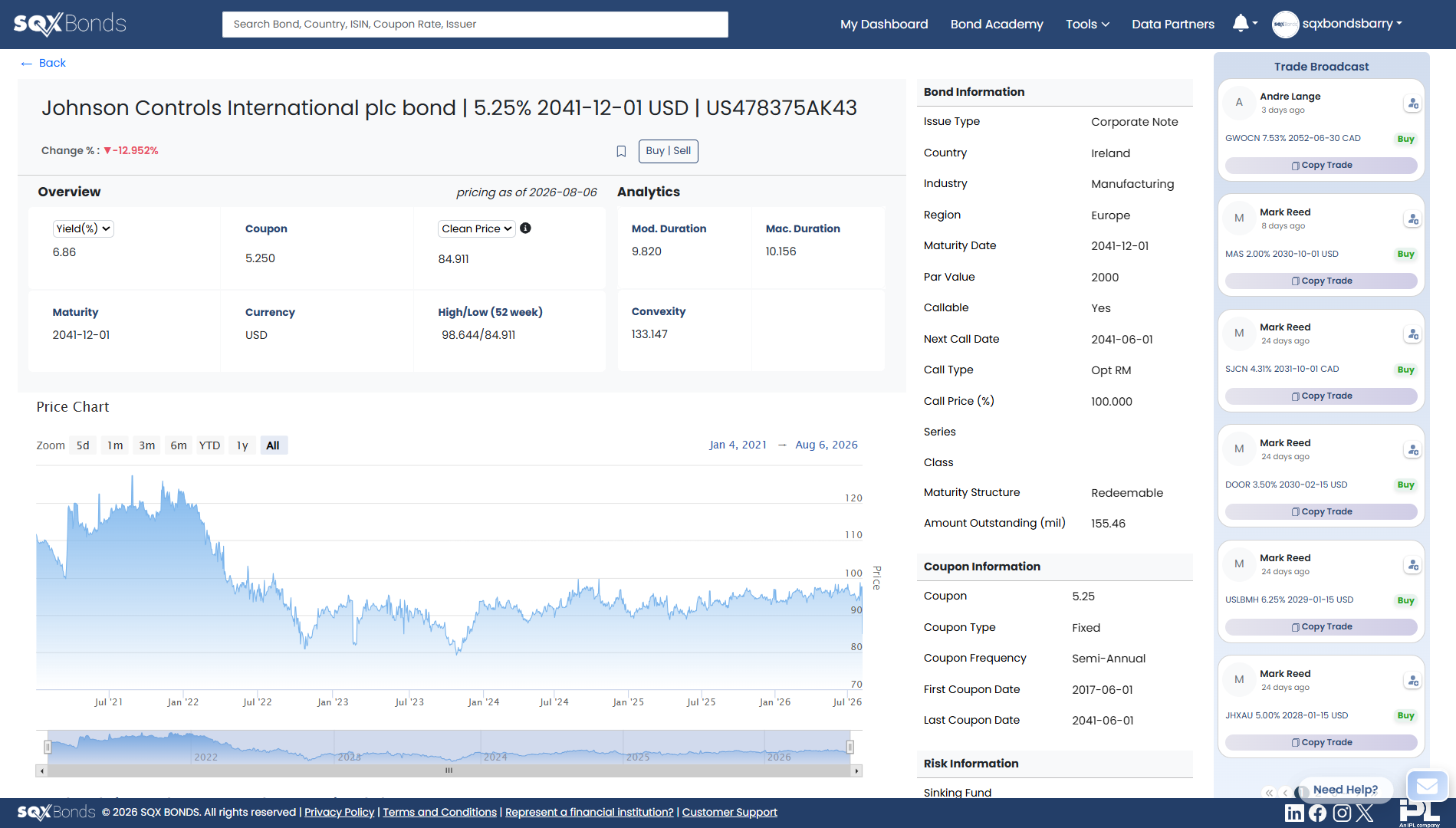
The coupon is the fixed annual interest a bond pays as a percentage of its face value. It does not change. Yield reflects what you actually earn based on the price you pay, so a bond bought below par yields more than its coupon, and one bought above par yields less.
Screen on yield when you care about return. Screen on coupon when you care about the size and predictability of the cash payments themselves, which matters if you are matching a bond to a specific expense.
Maturity sets your risk more than you might expect
Longer bonds pay more, and they also move more when rates change. A 20-year bond loses more value than a 3-year bond on the same rate increase. If you plan to hold to maturity, that price swing is noise. If you might sell early, it is the main thing to watch.
Screening a range instead of a single year is what makes bond ladders possible. Filter for maturities in 2028 through 2033, pick one bond per year, and you have a ladder that returns principal on a schedule.
Filter out callable bonds if you want certainty
A callable bond lets the issuer redeem it early, and issuers usually do that when rates have fallen and they can refinance cheaper. You get your principal back at the worst possible time to reinvest it. If you are buying for a fixed horizon, exclude callable issues and you remove that variable entirely.
Industry, currency, and country
These are concentration controls. Six bonds from six utilities is not diversification. Non-USD bonds add currency exposure on top of credit and rate exposure, which can help or hurt independently of whether the issuer pays on time.
Save the filter, not just the results
New bonds are issued constantly. A saved filter turns a one-time search into an ongoing watch list, so the next issue that matches your criteria shows up without you rebuilding the search.
The SQX Bonds screener is free to use, with no account needed to start filtering. Browse issuers alphabetically in the issuer directory, or create a free account to save custom filters and build portfolios.